Home › Concrete Sidewalk and Walkway
We pour concrete sidewalks and walkways in Tulsa, OK that are smooth, level, and safe to walk on. From front entries to garden paths, we design routes that drain well and resist cracking. Make getting around your property easier with professionally installed concrete walkways.
Superior Concrete Tulsa provides professional concrete sidewalk throughout Tulsa, OK, Oklahoma and the surrounding area. Our licensed, insured crew delivers safe, clean, on-time work with a free estimate before anything begins. Call (918) 303-7391 or request your free quote.
Concrete Sidewalks in Tulsa That Stay Level and Look Clean
A concrete sidewalk should do more than connect point A to point B. In Tulsa, it also has to stand up to clay soils, hot summers, freeze-thaw cycles, and tree roots that never stop growing. Superior Concrete Tulsa builds concrete sidewalks and walkways that account for all of those realities so your paths stay safe, level, and attractive for years.
Whether you need a new front walk from driveway to porch, a public-facing sidewalk along the street, or a backyard garden path, we start by looking at how the space is actually used. We consider slopes, drainage patterns, where water tends to sit after a storm, and how close we are to large trees or utilities. That site review is what determines how thick the concrete should be, what base is needed, where to place joints, and how to avoid future heaving or settlement.
Superior Concrete Tulsa works across Tulsa and nearby communities, including Broken Arrow, Owasso, Jenks, Bixby, and Sand Springs, and we adjust our approach based on specific neighborhood conditions, such as older Midtown clay-heavy lots versus newer developments with more engineered fill soils.
How We Build a Long-Lasting Concrete Sidewalk or Walkway
A durable concrete sidewalk in Tulsa starts well before any concrete truck arrives. Our process is structured, repeatable, and tailored to your property.
1. Layout and elevation planning: We set string lines and laser levels to define slope and elevation. Sidewalks must pitch slightly away from structures and toward approved drainage routes, typically 1 to 2 percent slope. This keeps water from pooling against foundations or on the walkway surface.
2. Excavation and base: We typically excavate 4 to 8 inches depending on soil conditions and intended use. In most Tulsa yards, we install 3 to 4 inches of compacted crushed limestone or similar aggregate. In areas with softer subgrade or poor drainage, we may increase base thickness or use geotextile fabric to keep the base separated from native soil.
3. Forms and reinforcement: We set sturdy forms to the final width and elevation, checking for straight lines and clean curves. For typical residential sidewalks, we recommend 4 inches of concrete with fiber reinforcement plus rebar or welded wire mesh in key areas such as near driveways, tree roots, or transition points. For heavier-use or commercial walkways, we may increase the slab thickness to 5 or 6 inches and use rebar grids.
4. Concrete placement and finishing: We generally use 3,500 to 4,000 psi ready-mix concrete for sidewalks in this region, often with air entrainment to handle freeze-thaw cycles. Our crew places, levels, and screeds the mix, then uses bull floats and hand tools to achieve a consistent surface. We almost always recommend a broom finish for sidewalks so they remain slip resistant when wet.
5. Joints and edges: We cut control joints at regular, planned intervals, typically every 4 to 5 feet, and at any interior corners or changes in direction. These joints help control where natural shrinkage cracks form. We tool or cut them to a proper depth, usually about one quarter of the slab thickness. Edges are tooled for a clean, chip resistant border.
6. Curing and cleanup: After finishing, we protect the fresh concrete from rapid moisture loss, foot traffic, and pets. Depending on weather, we may apply a curing compound that helps concrete reach proper strength. We then remove forms, backfill along edges, and fine-tune grading so water flows away from the new sidewalk instead of toward it.
Tulsa Climate, Tree Roots, and Other Local Factors That Affect Your Sidewalk
Tulsa’s weather and soils are hard on concrete. Hot summers, occasional ice storms, and frequent freeze-thaw cycles in winter put stress on sidewalks. Local clay soils swell when wet and shrink when dry, which can tilt or crack poorly built slabs.
Superior Concrete Tulsa accounts for these conditions during design. We look for downspouts that dump water beside the walk and areas that stay soggy after a rain. If drainage is poor, we recommend grading changes, shallow swales, or in some cases French drains to move water away from the walkway and subgrade. Keeping the base dry is a major factor in preventing heaving and settlement.
Tree roots from oaks, maples, and Bradford pears are another big issue in Tulsa neighborhoods. We try to align sidewalks so we avoid cutting major structural roots, which can damage the tree and still end up lifting the walk over time. Where we cannot avoid roots, we may create wider expansion joints, install root barriers, or build slightly thicker reinforced sections to better handle future movement.
Seasonal timing matters too. We avoid placing sidewalks in the hottest part of the day during peak summer, since rapid moisture loss can cause surface cracking and weak top layers. In colder months, we monitor overnight lows and ground temperature and will delay the pour if freeze risk is high while the concrete is still young. That timing discipline is one of the key differences between sidewalks that last and those that start flaking or spalling after a few seasons.
Design Options for Concrete Sidewalks and Walkways
Function comes first, but your sidewalk can also complement your home and landscaping. Superior Concrete Tulsa offers several ways to customize the look and feel of your concrete sidewalk.
Finish options: The standard choice for Tulsa sidewalks is a light broom finish, which provides traction and hides minor dust and pollen better than a smooth surface. For more prominent entry walks, we can combine a broom finish in the main walking area with smooth or slightly textured borders for visual contrast.
Color and tint: We can install integral color in the mix or apply color hardeners or stains after placement. Natural gray is the most economical, but subtle tans, light browns, or charcoal tones can tie the sidewalk into your brick, stone, or siding. We guide you on colors that hold up well in our strong Oklahoma sun without excessive fading.
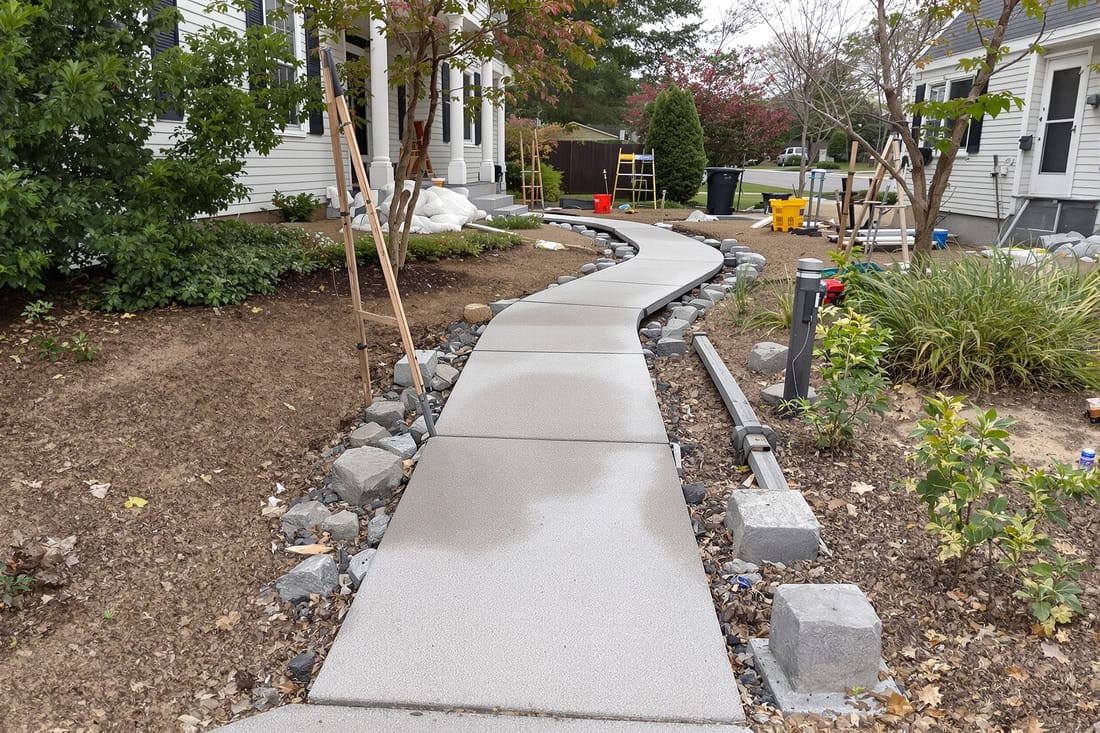
Shape and layout: Straight runs are practical, but many homeowners choose gentle curves from driveway to front door, or wider landing areas at steps and porch entries. In backyards, we often create winding garden paths with varying widths to create interest and define planting beds.
Decorative borders and patterns: For higher-visibility areas, we can add a decorative border in a different finish or texture, such as a lightly stamped edge that resembles brick or stone, while keeping the main walking surface practical and easy to maintain. This approach keeps costs manageable while still creating a custom look.
Accessibility considerations: We design sidewalks to be comfortable for all users. That can include smoother transitions from driveway to walk, avoiding sharp grade changes, and making sure any ramped areas meet sensible slopes so strollers and walkers roll easily.
What Drives the Cost of a Concrete Sidewalk in Tulsa
Homeowners often ask why sidewalk quotes can vary. Transparent pricing starts with understanding the factors that actually affect cost. Superior Concrete Tulsa explains these clearly so you can compare bids in an apples-to-apples way.
Size and layout: Longer or wider sidewalks naturally use more materials and labor. Curved layouts, tight radiuses, and complex shapes take more time to form and finish than straight runs.
Thickness and reinforcement: A basic 4 inch sidewalk with fiber reinforcement costs less than a 5 or 6 inch slab with full rebar grids. Areas that cross driveways, sit near heavy parking, or serve commercial foot traffic may need thicker sections and more steel.
Site conditions and access: If we can park close and wheelbarrow directly, costs stay lower. Tight side yards, steep slopes, or obstacles like fences and trees require more labor and sometimes specialized equipment. Poor soil that needs extra excavation, thicker base, or soil stabilization will also add to the price.
Removal and disposal: Replacing a failing sidewalk involves breaking and hauling away old concrete. The depth, presence of reinforcement, and proximity to utilities all influence how complex removal will be. If a previous contractor poured directly over unstable soil, we may recommend deeper removal so the new walk has a solid foundation.
Finishes and upgrades: Decorative borders, color, stamping, and complex joint patterns require more time and skill. We provide separate pricing for these features so you can choose what delivers the most value for your property and budget.
Permits and code requirements: In many Tulsa neighborhoods, sidewalks within the city right-of-way must meet specific city standards and may require permits or inspections. We handle those details as needed and include them in our proposals when applicable.
Common Sidewalk Problems and How We Fix or Prevent Them
If you already have a concrete sidewalk in Tulsa, you may be seeing issues such as trip hazards, pooling water, or surfaces that are flaking away. Understanding the cause is the first step to a proper fix.
Cracking and heaving: Some hairline cracks are normal in concrete, but wide cracks, height differences between panels, or random breaks often come from poor base prep, missing control joints, or expansive soils. For minor issues, we may grind transitions or seal cracks. For more serious movement, replacement of affected panels, with better base and drainage, is often the long-term solution.
Settling and low spots: Sidewalk sections that sink typically indicate loose or eroded subgrade. In limited cases, slab lifting or mudjacking can raise a panel, but we first check whether the soil is still unstable or water is undermining the area. Superior Concrete Tulsa focuses on addressing the root cause, not just the symptom, so the fix lasts.
Surface spalling and flaking: In our climate, this often results from finishing practices where water or bleed water was worked into the surface, or from deicing chemicals attacking weak top layers. When spalling is shallow and limited, resurfacing with proper preparation can improve appearance and performance. If concrete is structurally compromised, replacement is more effective.
Drainage problems: Sidewalks that hold water or drain toward your house can cause both safety and foundation issues. We evaluate whether regrading adjacent soil, adding inlets or drains, or replacing specific sections with corrected slope will solve the problem.
When we build new sidewalks or replace failing ones, we take notes from these common failures and adjust design, base, joints, and drainage so the same issues do not return.
What to Expect When You Hire Superior Concrete Tulsa
A concrete sidewalk project affects access to your home, so clear communication and planning matter. Superior Concrete Tulsa outlines the process up front so there are no surprises.
Initial consultation: We meet on-site, walk the route, take measurements, and discuss how you and your family use the space. We point out drainage issues, tripping hazards, or tree root concerns and suggest options to address them. You receive a written estimate that lists thickness, reinforcement, finish type, and any decorative features.
Scheduling and preparation: Once approved, we schedule your project around both your calendar and the weather. Before work begins, we call in utility locates if needed. You will know which access points will be affected and for how long.
Construction: Most residential sidewalks take one to three days on-site, depending on size and complexity. Day one typically includes removal and excavation, base installation, and forming. Concrete placement and finishing usually occur the next available weather window, and we return to cut joints if needed, remove forms, and handle cleanup.
Curing and use: We will give you clear guidelines on when you can walk on the new concrete, typically after 24 hours, and when heavy items like vehicles or equipment should be kept off adjacent edges. We also provide recommendations on sealing, deicing practices, and general care so your new sidewalk stays in top shape.
If you are planning a new concrete sidewalk or walkway in Tulsa or the surrounding area, Superior Concrete Tulsa is equipped to handle everything from simple replacements to custom-designed paths that improve both safety and curb appeal.