Home › Commercial Parking Lots and Drive Lanes
We construct concrete parking lots and drive lanes in Tulsa, OK that handle car and truck traffic with minimal maintenance. Our team manages grading, thickness design, and striping coordination. Give your customers a smooth, durable surface that represents your business well.
Superior Concrete Tulsa provides professional concrete parking lot throughout Tulsa, OK, Oklahoma and the surrounding area. Our licensed, insured crew delivers safe, clean, on-time work with a free estimate before anything begins. Call (918) 303-7391 or request your free quote.
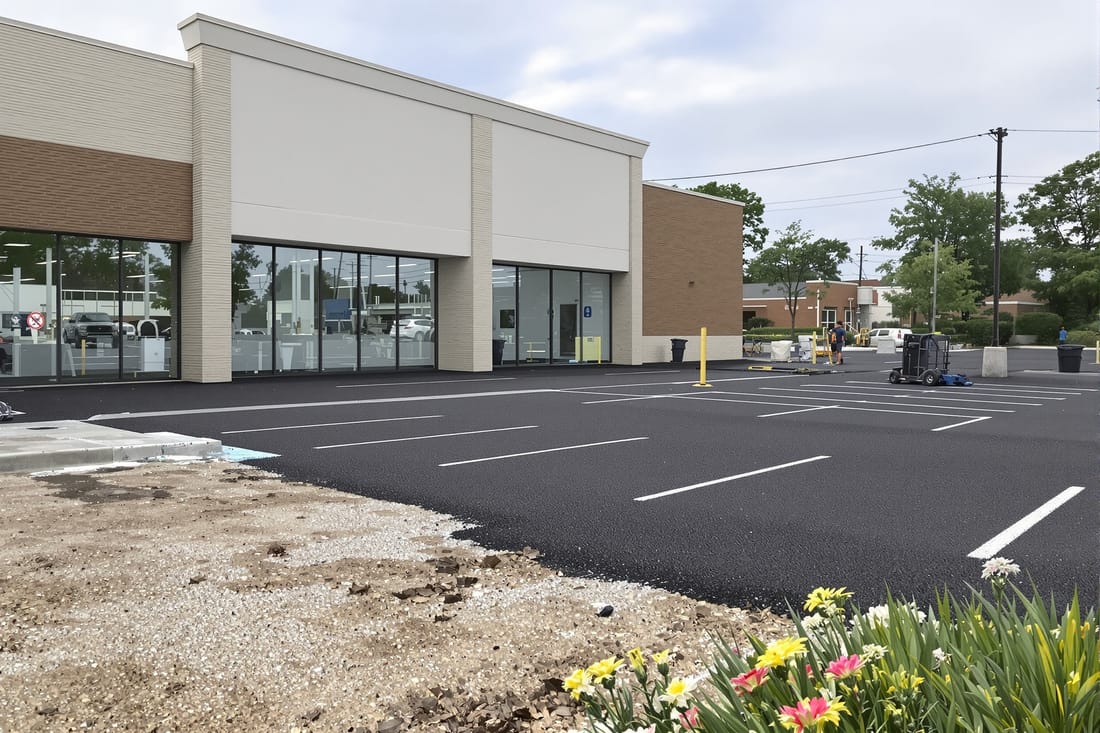
Concrete Parking Lots Built for Tulsa Businesses
A concrete parking lot is more than a flat slab. For a Tulsa business it has to handle heavy summer heat, sudden downpours, delivery trucks, and daily customer traffic without rutting or breaking up. Superior Concrete Tulsa focuses on commercial parking lots and drive lanes that match the real conditions in northeast Oklahoma, not just a textbook design.
Before we price or pour anything, we walk the site with you. We look at where water will naturally flow, how delivery trucks enter and turn, where customers walk, and how close we are to building entrances and loading docks. A small medical office with light car traffic needs a different design than a warehouse with semi trucks backing into docks. We tailor the concrete thickness, reinforcement, and layout to what actually happens on your property.
In Tulsa, concrete is usually the better long term choice than asphalt for commercial parking because it handles heavy loads and high temperatures with less rutting and oil damage. It costs more up front than asphalt in many cases, but the reduced maintenance, better appearance over time, and better resistance to fuel spills and turning truck tires often make it the cheaper option across 20 to 30 years. We walk you through that comparison using rough life cycle numbers so you are not making the decision blind.
How We Design Commercial Parking Lots and Drive Lanes
Proper design is what keeps a concrete parking lot from cracking apart or holding water after the first big storm. Superior Concrete Tulsa starts with subgrade evaluation. Tulsa soils often include clay that shrinks and swells, especially around Broken Arrow Expressway and along the Arkansas River. We test how firm the base is and identify any soft spots that need undercutting and replacement with compacted aggregate.
We design pavement thickness by traffic type. For most retail and office parking areas we typically use 5 to 6 inch thick concrete with rebar or heavy wire reinforcement. For drive lanes that carry trash trucks or delivery trucks we often go to 7 or 8 inches and may tighten joint spacing to better control cracking. For properties with regular semi traffic, like distribution facilities or industrial yards, we specify thicker sections and stronger mixes so the slab distributes wheel loads without pumping or faulting at joints.
Joint layout is another key detail. We plan saw cuts to create panels that are as square as possible, usually in the 10 to 15 foot range depending on slab thickness, so natural shrinkage cracks fall into the joints instead of across your drive lanes. Around catch basins, light pole bases, and building corners, we use special joint details to avoid the stress concentrations that commonly cause random cracks. For slopes, we follow sensible grades so water flows toward inlets or to the street without creating steep ramps that scrape vehicles.
From Excavation to Pouring: What Actually Happens On Site
Once the design is finalized, we schedule the work so we disrupt your business as little as possible. For many Tulsa properties we phase the job, building half the parking at a time so customers and employees still have a place to park. We coordinate with you on delivery windows, garbage pickup routes, and any shared access drives you have with neighboring businesses.
We start by stripping the existing surface, whether it is grass, gravel, or old asphalt or concrete. Soft or pumping areas are undercut and replaced with compacted base rock. We use plate compactors and rollers, and we check compaction to avoid future settling that can cause birdbaths or broken slabs. Curb lines, islands, and any dumpster pads are staked out clearly.
Formwork goes in next, along with any edge curbing and thickened sections at entrances and dumpster pads. We install dowels where new concrete ties into existing slabs or city streets so you do not get differential movement at those joints. Reinforcement, usually steel rebar or wire mesh, is placed on chairs to keep it in the middle of the slab instead of lying on the ground where it does no good.
We then place the concrete using chute, pump, or buggy depending on access. In Tulsa heat we often schedule pours early in the morning to keep the surface from drying too fast, which helps reduce plastic shrinkage cracking. We use vibratory screeds and hand tools to consolidate and level the slab, then finish to a light broom texture for traction when it is wet. We do not use slick finishes on parking areas because they can be unsafe in rain or ice.
Saw cutting joints happens at the right time, not whenever is convenient. Cut too soon, the edges ravel. Cut too late, random cracks already form. We monitor the set of the concrete and saw cut in that window when the surface is firm yet still green. We then apply curing compound or use cure blankets (in cooler months) to slow moisture loss and build long term strength.
Local Weather, Timing, Costs, and Common Problems
Tulsa weather directly affects when and how we build concrete parking lots and drive lanes. Hot summers mean we control mix temperature, set times, and placement speed. We may add retarders or use cold water in the mix during extreme heat to keep the concrete workable long enough to get a good finish. Sudden thunderstorms are a fact of life in spring and summer, so we check the forecast and keep protection materials on hand, such as plastic sheeting and ditch checks, to prevent erosion or washouts.
Cold weather work is possible, but when temperatures drop we adjust mix designs, use blankets, and sometimes add accelerators to achieve proper strength before opening the lot to traffic. We avoid pouring on frozen ground because that traps moisture under the slab and leads to soft spots and future cracking.
Cost drivers for a concrete parking lot include thickness, total square footage, base preparation, drainage work, and access. A simple rectangular lot with good existing subgrade and car traffic only will be much cheaper per square foot than a tight, irregular layout with multiple drains, thickened truck lanes, and extensive demolition of old pavement. Superior Concrete Tulsa provides clear line item proposals so you can see where money is going, whether that is extra base rock, heavier reinforcement, or additional drains.
Common problems we see on existing Tulsa commercial lots include standing water, shattered concrete at dumpster pads, joints that have opened and raveled, and edge failures where the slab does not have proper support. When we repair or replace, we correct the underlying causes, not just the surface damage. That might mean adding a catch basin, regrading a section of drive lane, or thickening and reinforcing a truck loading area so it can actually handle the load it sees every week.
What Tulsa Property Owners Should Know Before Hiring
Before you bring in any contractor to install or replace a concrete parking lot, there are a few things you should confirm. Ask how they calculate slab thickness for different areas of your property. If they suggest the same thickness for customer parking and for heavy truck loading zones, that is a red flag. A good contractor will speak specifically about traffic types, base conditions, and load paths.
Ask to see a joint layout plan. Proper joint spacing and placement is what keeps a good looking lot from turning into a spiderweb of cracks. Superior Concrete Tulsa provides a basic layout with our proposals for larger jobs so you can see how we intend to control cracking. We can also discuss doweled joints at entrances and where your lot connects to city streets or neighboring properties.
Permits and inspections matter inside Tulsa city limits and in surrounding jurisdictions like Broken Arrow, Jenks, and Bixby. We are familiar with local requirements for approach drives, sidewalks, and ADA access, and we coordinate with inspectors as needed. This includes proper slopes for accessible parking and routes, correct thickness where driveways meet public roads, and appropriate concrete strengths.
Finally, ask about curing time and when you can reopen sections to traffic. For typical commercial parking lots we often allow light car traffic after a few days, but we hold off on heavy truck traffic until the concrete has reached appropriate strength, commonly 7 days or more depending on mix design and weather. We schedule phased openings so you can get back to normal operations as quickly as possible without shortening the life of your new concrete.